As marketing teams gain the ability to build directly — launching landing pages, experiments, and onboarding flows without waiting on design or engineering — the risk of brand drift increases.
More speed and autonomy are valuable. But when more people are building, small inconsistencies compound.
Traditional brand control relies on reviews and approvals. But as output scales, review-based control becomes harder to maintain. If marketing is going to build directly, brand constraints need to be built into the system, not enforced after the fact.
Lovable supports two approaches, depending on where your organization is today.
Option 1: Cross-Project context
Not every organization has a formal design system. Many teams maintain brand consistency through informal norms, reference projects, and institutional knowledge.
Cross-Project context brings that knowledge into Lovable directly. It allows projects to read, reference, and copy files, code, and context from other projects in the same workspace.
What this means in practice?
Your team builds a landing page that nails the brand. Future projects can reference that page directly — pulling in components, layout patterns, and styling without starting from scratch. The agent can semantically search across your workspace to find relevant implementations, then copy them into the new project.
This isn't a live sync. It's a one-time copy, which means no risk of breaking dependencies across projects. But it dramatically reduces the "blank canvas" problem and ensures new work starts from proven patterns rather than guesswork.
Common use cases:
- Marketers launching campaign pages that match an established template
- Teams standardizing UI components across multiple microsites
- New team members getting up to speed by referencing prior work
Cross-Project Context can be disabled at the workspace or project level. Sensitive projects can be kept private, and admins retain full control over what can be shared.
Option 2: Design Systems (available to Enterprise)
Lovable supports importing and codifying your design system so you can reuse your company's design across all projects.
Today, this works natively with design systems implemented as front-end components. You can import components via package manager (public or private registries), and bring in design knowledge through documentation links, markdown files, or MCP connections to tools like Storybook.
Once imported, the design system persists across your work in Lovable — it's not just a starting template that drifts over time, but ongoing guidance for how code and design are generated.
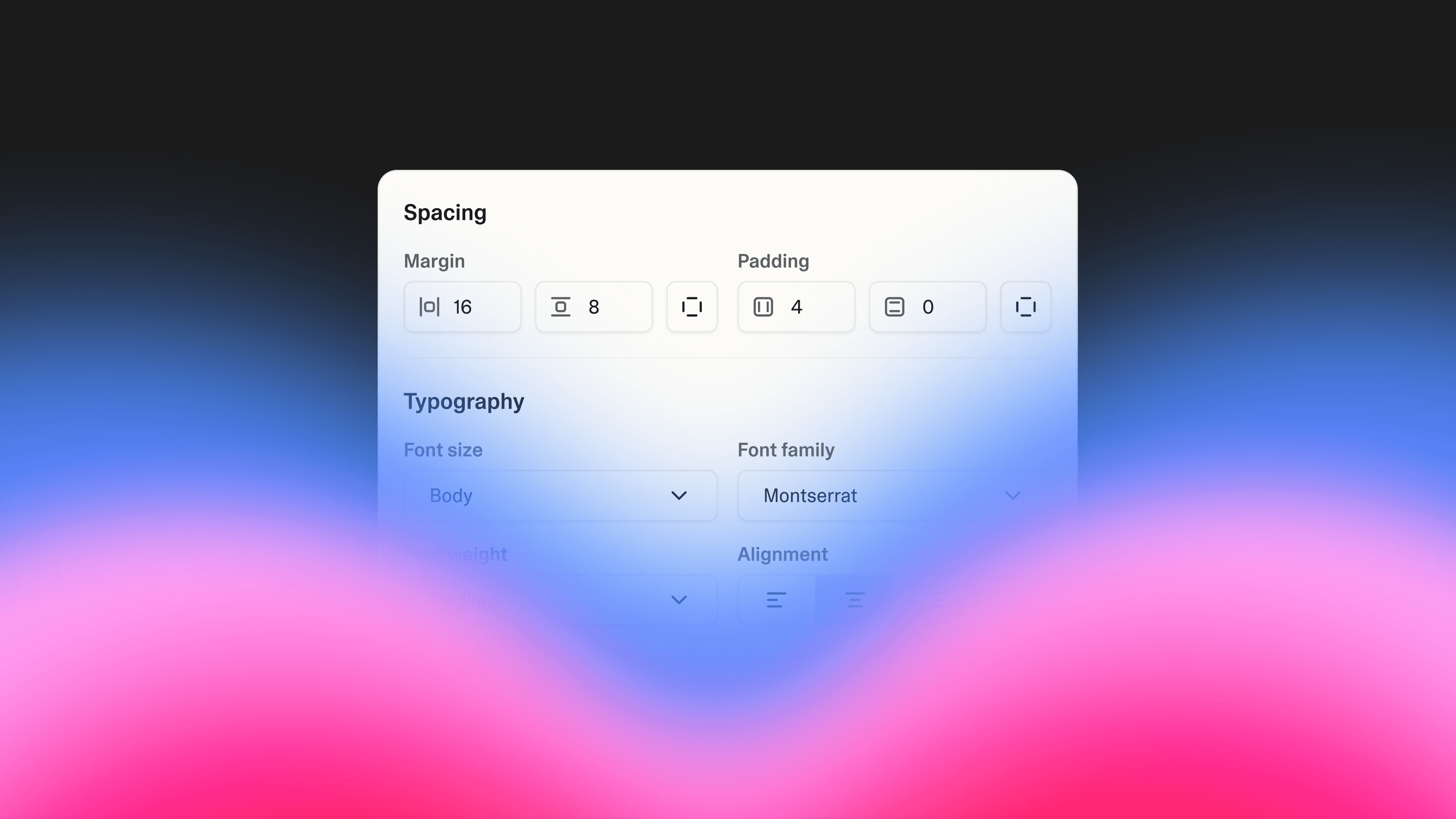
When a design system is active, brand constraints are enforced upstream rather than downstream. Marketing teams build using predefined, brand-compliant components. Layout, spacing, and typography are enforced by the system. Outputs that violate brand constraints become structurally difficult to produce.
Why this matters:
In traditional models, brand is enforced through review — design approvals, copy sign-offs, centralized gatekeeping. This approach doesn't scale. As throughput increases, review quality degrades or becomes a blocking function. Small inconsistencies accumulate. Brand debt compounds.
Instead of catching mistakes after the fact, design systems allow you to make the compliant path the fastest path. Marketing can execute without engineering involvement or routine design reviews because the constraints engineering and brand care about already exist in the system.
What this enables:
- Marketing builds directly inside the design system rather than routing execution through engineering
- Engineering shifts focus to evolving components and rules rather than servicing individual requests
- Iteration accelerates without increasing inconsistency
- Volume increases without increasing risk
Which approach is right for you?
If you don't have a formal design system:
Cross-Project Context gives you a practical path to consistency. Designate one or more "reference projects" that represent your brand standards. New projects can pull from these directly, ensuring that institutional knowledge compounds rather than dissipates.
This also provides a path toward formalizing a design system over time. As patterns stabilize across projects, they become candidates for codification.
If you already have a design system:
Lovable's enterprise design system integration lets you extend that system into marketing execution. Your existing components, tokens, and constraints become the building blocks marketing teams use directly — without translation, without handoffs, without waiting.
Use both:
The two features work well together. Use Design Systems to enforce your core brand infrastructure — the components, tokens, and patterns that should never vary. Use Cross-Project Context to share implementation examples, page layouts, and campaign patterns that build on top of that foundation.
This gives you governance where it matters (core brand elements) and flexibility where it helps (execution patterns that evolve). Engineering maintains the design system. Marketing references and extends proven implementations. Both stay aligned without constant coordination.